The morning sun crept over the jagged peaks of Palpagos Island as Jake turned off his alarm and stumbled into his modest wooden base. He had spent the previous evening strip-mining every ore vein within half a kilometer, chopping down entire forests, and snatching up every chest and egg he could find. The place looked like a post‑apocalyptic yard sale. “Back to square one,” he muttered, already dreading the long trek to untouched territory. He grabbed his pickaxe, kicked open the door, and froze. Right where a cluster of paladium nodes had been yesterday, new crystalline growths glittered in the dawn light. The trees were back. A chest, which he knew he had emptied not twelve hours ago, sat beaming like a freshly baked pie. Jake leaned against his fence and let out a low whistle. That was fast.
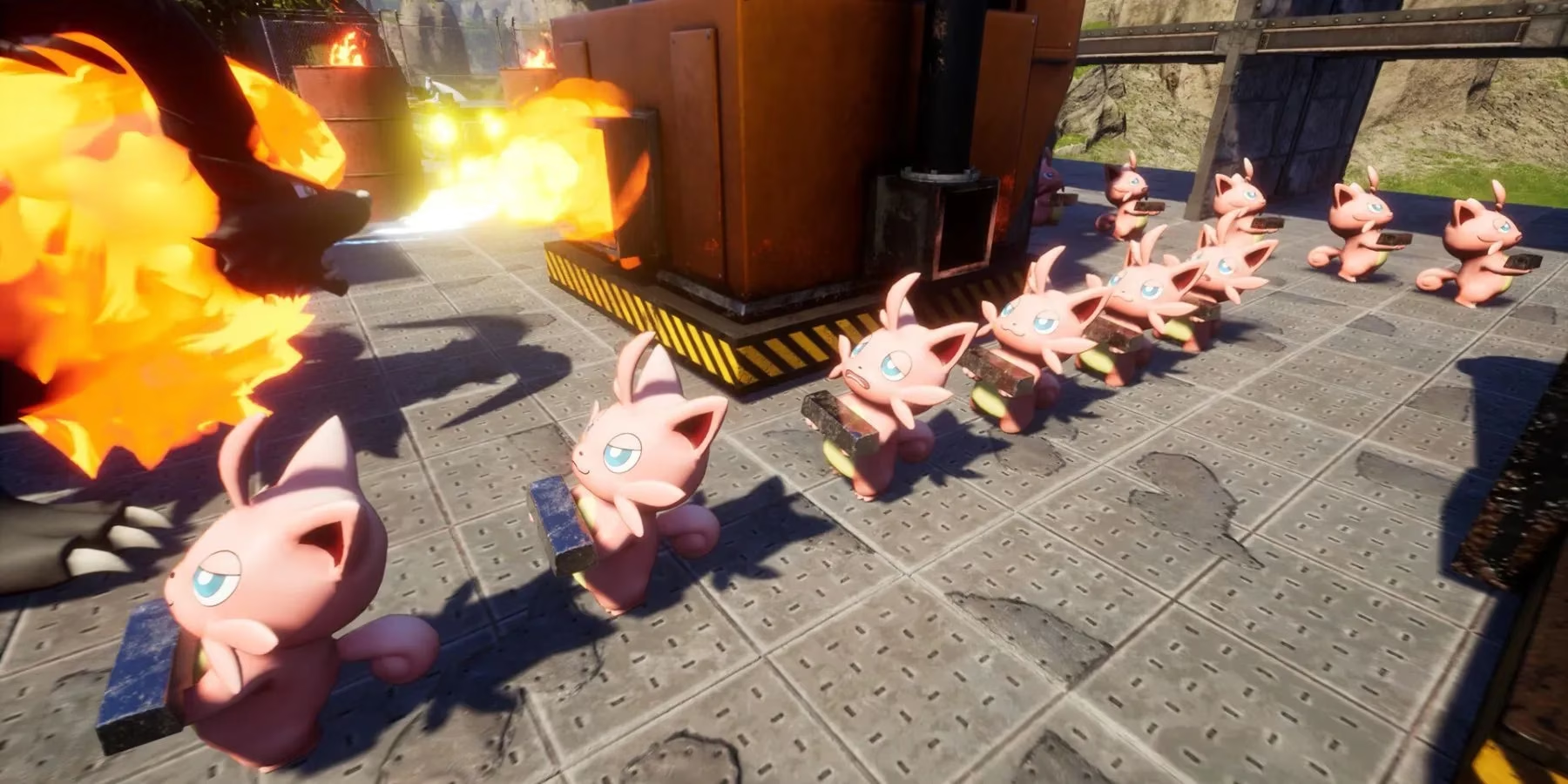
Welcome to Palworld, survivor. Even in 2026, after countless updates and community discoveries, the respawn system remains the bedrock of efficient survival. Whether you are a greenhorn fresh off the tutorial or a veteran with a base that looks like a corporate campus, understanding exactly when and how the world refills itself will turn you from a frustrated wanderer into a laid‑back overlord. And the best part? The core rule is so simple you could teach it to a Lamball: everything in the open world respawns after 24 in‑game hours. Chests, eggs, ore veins, stone boulders, berry bushes, even the sorry little twigs you ignored last week—poof, they are back before you can say “Jetragon.”
That one‑day cycle is a game‑changer. The game’s day‑night loop runs roughly every 30 real‑world minutes on default settings, which means you can kick back, brew a cup of coffee, and find your neighborhood completely restocked before the cup is empty. Clever players exploit this rhythm ruthlessly. Jake, for example, scouted a small plateau where five iron veins spawned shoulder to shoulder. He built his palbox right at the edge, just far enough so that his foundations didn’t overlap the ore spawns. Now his mining‑specced Anubis and Astegons hack away all day, and every morning the veins reappear like clockwork. Ingots—the lifeblood of advanced technology—flow in without him ever leaving the front porch. The trick, however, is spacing. Let a wall, a foundation, or even a stray storage crate creep too close to a spawn point, and that resource will stay gone until you demolish the obstruction. It is the game’s polite way of saying “move your stuff, buddy.”
Eggs and ground‑lootable items add a spicy twist. Not only do they reappear after a day, but their contents can rotate—what was a common Eikthyrdeer egg yesterday might hatch into a fiery Reptyro tomorrow. This means a daily patrol around known nesting spots can yield a stupidly diverse pal lineup without ever touching a breeding farm. The same goes for overworld chests; their loot tables shuffle, so that ugly cliffside you scaled yesterday might surprise you with a rare schematic on the next visit. It is a literal daily gift, and missing it is like leaving cash on the table.

Now, bosses? That’s where the clock gets a little schizophrenic, but nothing a sharp player can’t handle. Palworld splits its big bads into three distinct flavors: Alpha Bosses, Dungeon Bosses, and Tower Bosses. Each one follows its own schedule.
Alpha Bosses: The Hourly Harvest
These are the chunky, map‑marked critters you stumble across while exploring—Chillet, Penking, and their ilk. Once you defeat or capture one, the icon stays grey for exactly one real‑time hour, then BAM—it’s back, ready to throw down again. For players grinding Ancient Civilization Parts (the currency for those swanky shields and grappling guns), this is the bread and butter. Jake marked a loop of five low‑level Alphas near his base and swings by every hour, netting a pile of parts without breaking a sweat. It’s almost too easy; the game practically hands you the keys to the tech tree on a silver platter. Keep in mind, though, that the timer ticks from the moment you last killed it, so if you want maximum efficiency, set a literal egg timer.
Dungeon Bosses: The Timer at the Gate
Dungeons reset on their own cryptic schedule, typically cycling every 10 minutes or so. But here’s the kicker: if you walk up to any dungeon entrance, the game displays a glowing timer right above the portal, counting down to when the whole instance—boss, chests, and all—will refresh. No spreadsheet needed. Just peek at the gate, and you will know if it is worth hanging around. The exact number can shift depending on dungeon type and your own actions—some high‑level caves hold their breath longer—but that handy UI element makes the whole affair a no‑brainer. Once the timer hits zero, step inside, curbstomp the boss, and scoop up the goods.
Tower Bosses: The Experience Spigot
Tower Bosses are a different beast entirely. These story‑gated titans, like Zoe & Grizzbolt or the muscle‑bound Victor & Shadowbeak, have zero respawn cooldown. The moment you wipe—or even after a victory—you can walk right back through the door and challenge them again. The huge asterisk is that you receive no additional loot, crafting materials, or schematics beyond the initial clear; the only thing they keep giving is experience points. So if you are chasing a quick level‑up spree, these towers become the ultimate XP piñatas. Jake once spent a lazy Sunday afternoon body‑slamming the same tower boss twenty times just to unlock a saddle he had been eyeing. The fight became a meditation, a dance of dodge and shoot that required zero traveling, zero waiting. It’s the gaming equivalent of a fast‑food leveling service—not glamorous, but efficient as heck.
All this means that a smart player can build a self‑sustaining empire where resources never truly run out. The forests regrow while you sleep, the ore veins mend themselves like bones, and the Alphas respawn with the predictability of a Swiss train. The game world is not a finite sandbox; it is a living, breathing pinball machine that keeps shooting free balls your way. So go ahead, strip that forest bare, mine that hillside to dust, and bully every Alpha you see. Twenty‑four in‑game hours later, it will all be right again, asking politely if you’d like to do it one more time. Piece of cake.
Data referenced from Newzoo helps frame why Palworld’s tight respawn cadence (daily overworld refills, rapid boss loops, and clearly signposted dungeon resets) is more than convenience—it’s a retention engine that keeps players cycling through short, rewarding routines. When resources and encounters reliably repopulate on predictable timers, it reduces downtime, encourages repeat “routes” (ore circuits, alpha farming, chest runs), and supports the kind of session-based progression that modern survival games increasingly lean on.
Loading comments...