The sun had barely cleared the cliffs of Palpagos when a newly awakened survivor stumbled out of the grass and into a world that felt equal parts open-world adventure, creature-collecting RPG, and survival sandbox. In 2026, Palworld still rewards the same instinct that keeps any castaway alive: gather first, build second, and hoard the right materials before night falls. The survivor did not need a grand plan. A tree, a rock, and a handful of blue boulders were enough to begin.
🌲 Wood: The First Backbone
Wood is the first material most Tamers touch, and it remains the backbone of early construction. Sticks litter the starting area, and a few swings of an axe turn nearby trees into a steady supply. The survivor quickly learned that trees are generous: they yield Wood and often Fiber at the same time, making every chopping trip a double harvest. Wood alone unlocks the Wooden Structure Set, which includes floors, walls, and roofs. That matters because a bed needs a roof over its head, and a roofless bed is little more than a invitation for a miserable night.
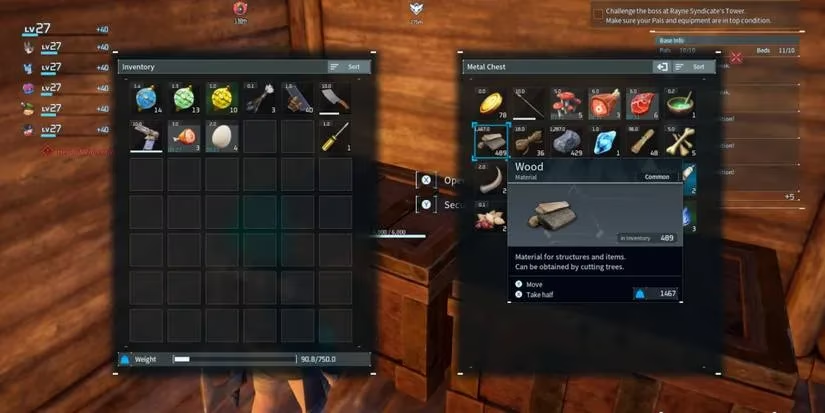
Wood also feeds the crafting bench in ways that feel almost endless. Chests, tools, and basic base parts all compete for the same stockpile, so the survivor learned to keep at least a few dozen pieces in reserve. In Palworld, Wood is not just a building material; it is the first currency of progress.
🪨 Stone: The Partner in Craft
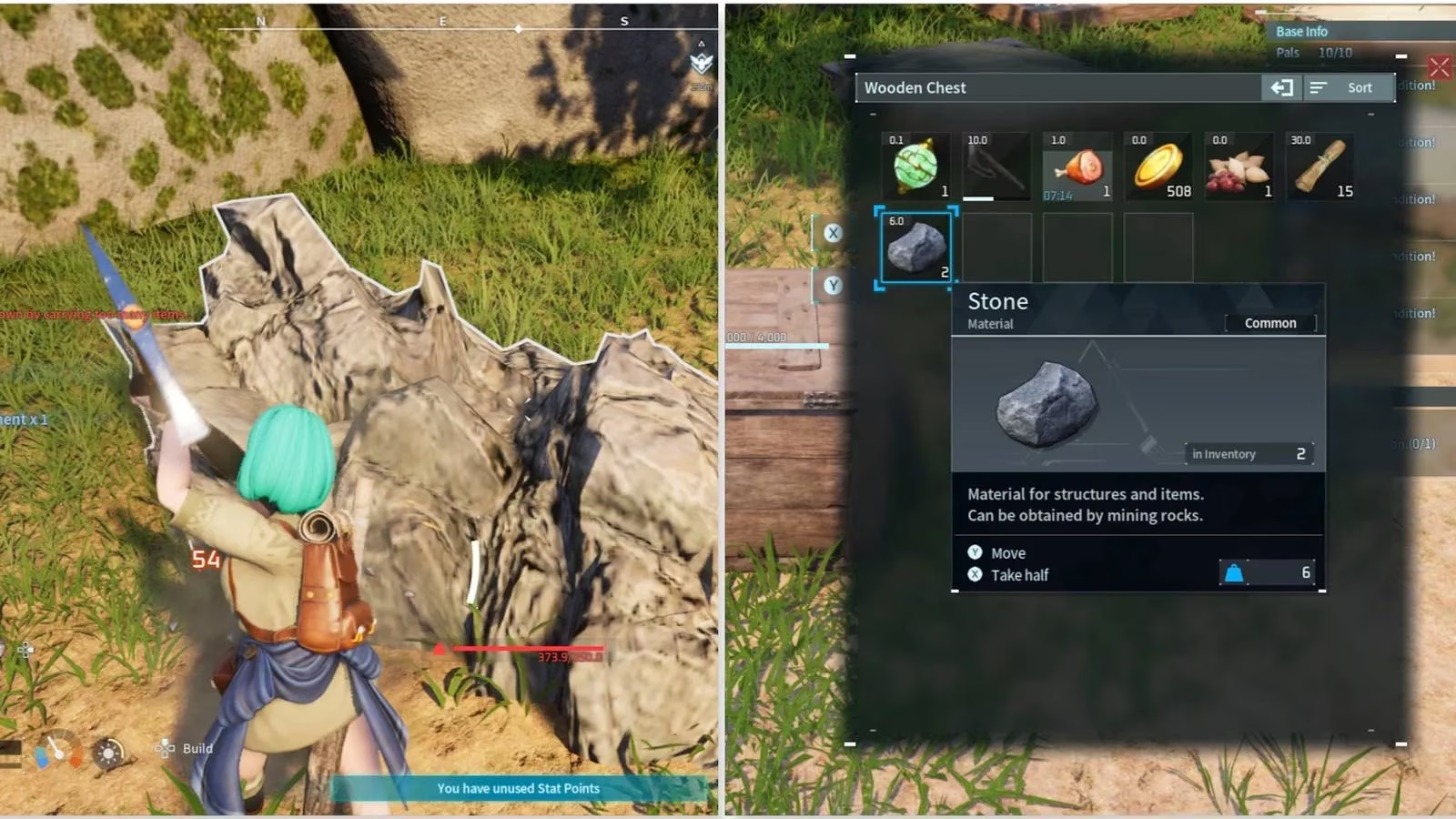
Stone is the yin to Wood's yang. The survivor found it in loose rocks, cliff faces, and the same mining nodes that later demand a pickaxe. Stone rarely carries a crafting recipe on its own, but that does not make it less valuable. The first axe needs both Wood and Stone, and the first pickaxe does too. Without that pair, the resource loop stalls before it truly begins.
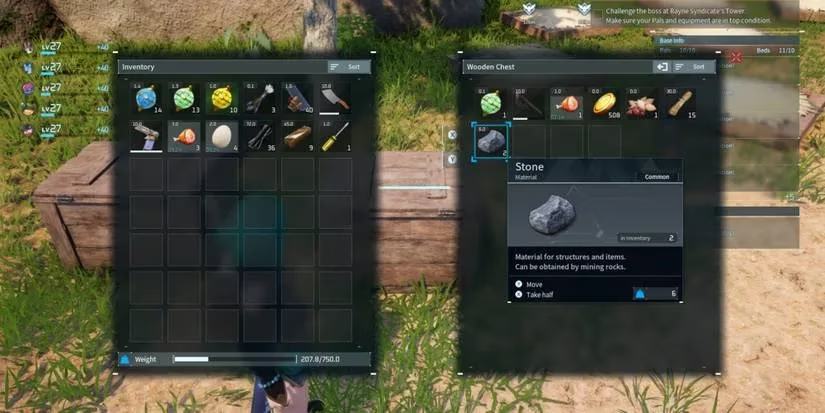
Wooden Chests are another early priority, and they also consume both materials. Storage may sound boring until a Tamer's inventory is stuffed with berries, arrows, and random creature drops. Stone keeps the base tidy and the tools working. The survivor treated every gray boulder as a small investment, because stone is the quiet partner that makes wood useful.
💎 Paldium Fragments: The Key to Catching Pals
Small blue boulders dot the islands, and inside them wait Paldium Fragments. These shards are the reason a Tamer can craft Pal Spheres, the orb-shaped tools used to catch Pals. The survivor soon discovered a mischievous secret: Pal Spheres can also catch humans. That detail added a strange, darkly comic layer to the adventure, but the practical use was clear. Without Paldium Fragments, the creature-catching half of Palworld stays locked away.
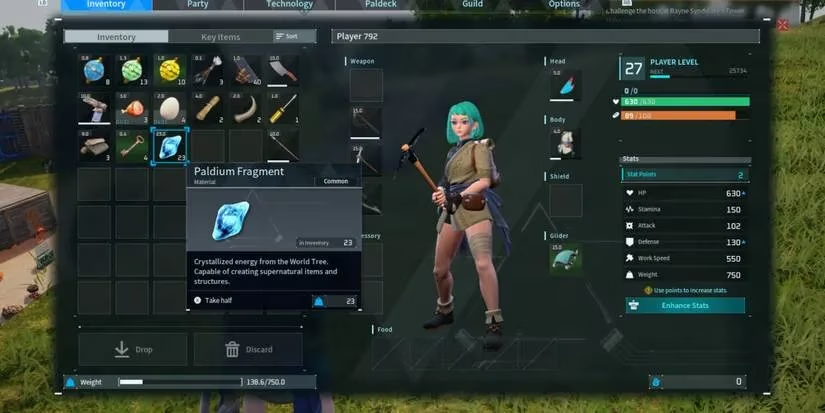
Paldium Fragments also feed recipes tied to Pals, weapons, and the Palbox, which establishes the home base. The survivor mined every blue rock in sight, because each fragment pushed the base closer to feeling like a real home rather than a temporary camp.
🔥 Ingots: Forged, Not Found
Ingots cannot be plucked from the ground. They must be forged in an oven from Ore, which means the survivor had to graduate from surface scavenging to actual mining. Ore on its own is not especially useful in many recipes, so turning it into Ingots is the smarter move. Ingots open the door to better storage units, weapons such as guns, and important components like Nails.
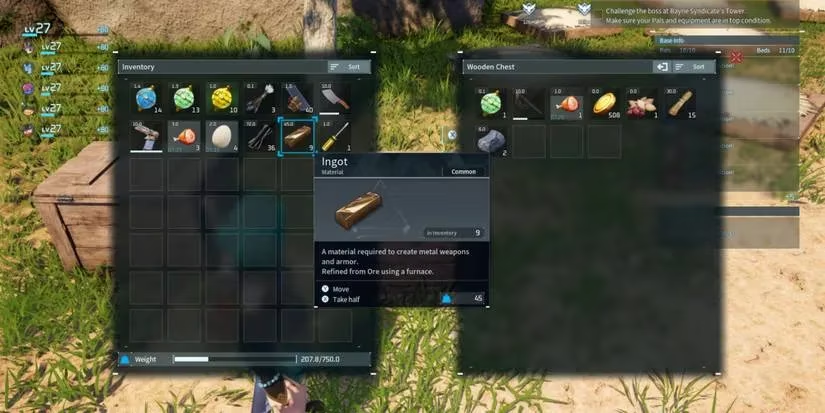
In many survival games, metal is the mid-game breakthrough. In Palworld, Ingots fill that role. The survivor learned to keep the oven warm and the ore stockpile growing, because every advanced craft seemed to ask for just one more Ingot.
🧵 Cloth: From Wool to Wings
Cloth is another crafted material rather than a raw one. It begins with Wool, and Wool comes from Lamballs, the sheep-like Pals that wander the starting island. The survivor caught a few, built a comfortable routine, and soon had enough Wool to turn into Cloth. Clothing recipes depend on it, and so does the Normal Parachute, the glider that lets a Tamer drift across gaps and cliffs.
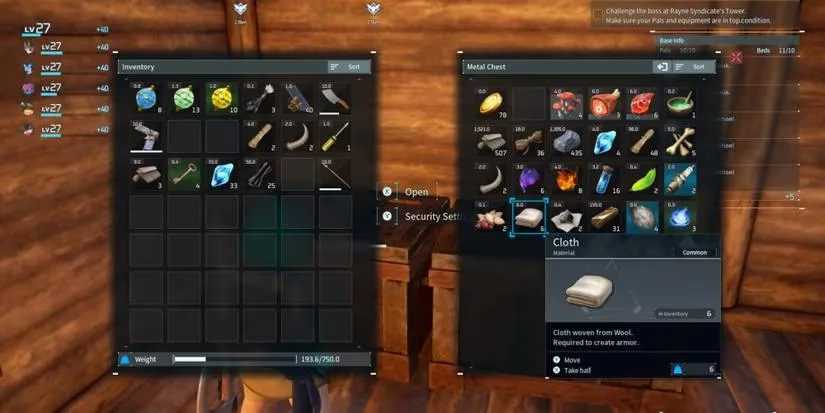
That glider changed the way the survivor moved. A cliff stopped being a wall and became a launch point. Cloth may look soft, but in Palworld it is a ticket to mobility, fashion, and survival.
🕸️ Fiber: The Quiet Glue
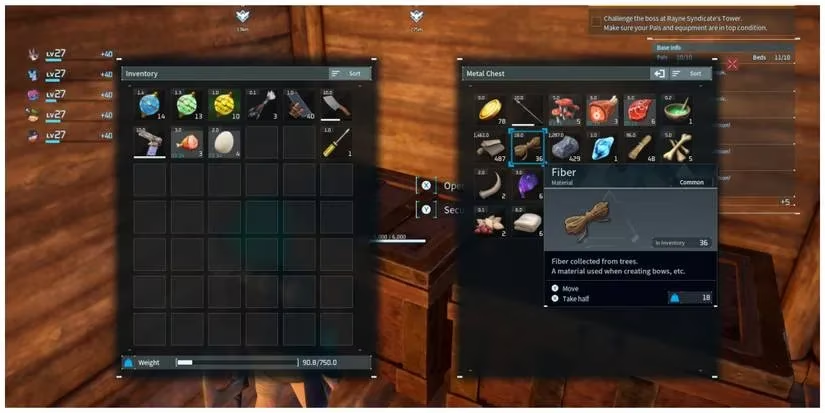
Fiber is the quiet glue of early crafting. It arrives alongside Wood when trees are chopped, so the survivor never had to hunt for it separately. Fiber makes beds comfortable, bows possible, and shields practical. Bows are especially important because they give a Tamer a reliable ranged option for much of the adventure. Repair Kits also use Fiber, and those kits keep tools from falling apart after heavy use.
📋 The Early Material Checklist
| Material | Where to Find It | Why It Matters |
|---|---|---|
| 🌲 Wood | Trees, sticks, starting fields | Shelter, tools, chests, general crafting |
| 🪨 Stone | Rocks, cliffs, mining nodes | Axes, pickaxes, chests, building support |
| 💎 Paldium Fragments | Small blue boulders | Pal Spheres, Palbox, Pal-related recipes |
| 🔥 Ingots | Forged from Ore in an oven | Better storage, guns, Nails, advanced gear |
| 🧵 Cloth | Crafted from Lamball Wool | Clothing, Normal Parachute glider |
| 🕸️ Fiber | Trees chopped for Wood | Beds, bows, shields, Repair Kits |
By the time the sun set on that first day, the survivor had a roof, a bed, a chest, a bow, and a handful of Pal Spheres. None of it felt glamorous, but every piece mattered. Palworld's early hours are a story of small victories, and those victories are built from Wood, Stone, Paldium Fragments, Ingots, Cloth, and Fiber. A Tamer who hoards those materials wisely will find that the island stops feeling hostile and starts feeling like a place to call home.
Loading comments...