I woke up in 2026 with an old update notification on my phone: Palworld was celebrating some new island event, and my feed was full of creatures that still made me do a double take. That double take took me straight back to January 2024, when the game first exploded and The Pokémon Company issued a statement that felt less like a press release and more like a cold front rolling over a server room—everyone felt the temperature drop at once.
Palworld launched in early access on January 19, 2024. In six days it sold over 8 million units and reached 2 million concurrent players on Steam. I was one of them. My friends called it 'Pokémon with guns,' and honestly that label was the entrance ramp, not the destination. The goal was to survive the Palpagos Islands, capture Pals, build a base, craft tools, and cook food so hunger did not erase my character before I found the next creature. It was a survival loop stapled onto a monster-catching collection, and I could not stop playing.
Then The Pokémon Company's statement arrived about a week after launch. It did not say Palworld by name, but it did not need to. The words 'another company's game released in January 2024' were aimed like a searchlight. The company said it had not granted any permission for the use of Pokémon intellectual property or assets in that game, and that it intended to investigate and take appropriate measures against any infringement. I remember reading it aloud to my group chat. It was not a legal ruling, but it was a clear flare in the fog.
What made it stranger was the contrast. Pocketpair CEO Takuro Mizobe said the team had worked to avoid copyright infringement with Pokémon or other franchises. Meanwhile, The Pokémon Company's former chief legal officer called Palworld 'ripoff nonsense.' Those two positions pulled at the game like a tug-of-war over the same rope, and players stood in the middle holding both ends.
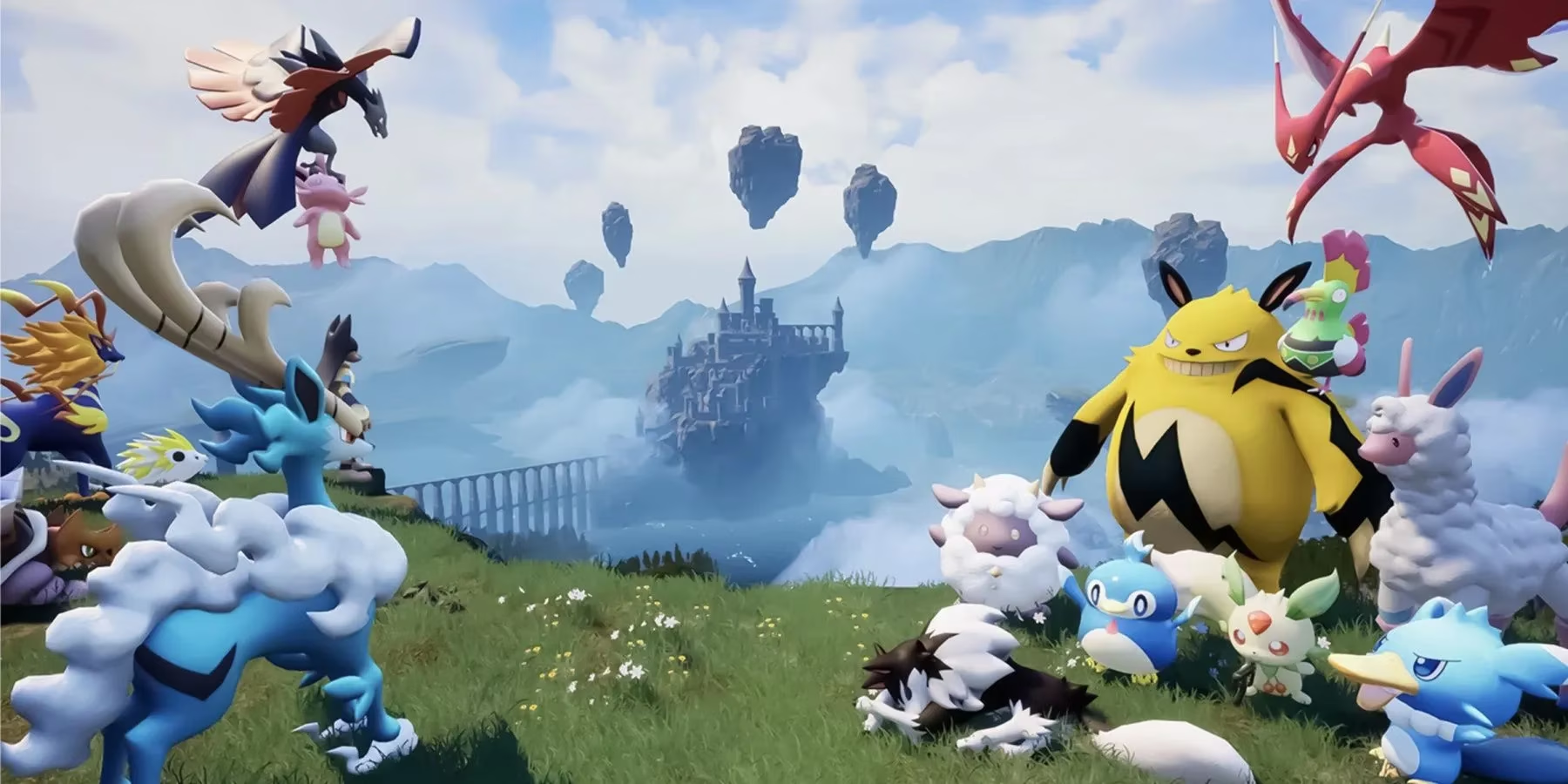
The comparisons did not stop at broad mechanics. Players found specific creature designs that felt like a game of spot-the-difference. I saw a fan-made mod that put Ash Ketchum and Pikachu into Palworld, and before the trailer could even settle into my memory, Nintendo hit it with a DMCA takedown notice. That strike landed on the mod like a hawk snatching a breadcrumb from a picnic table: quick, precise, and a little terrifying. It did not stop fans from comparing the two games, but it did underline who was watching.
The whole affair felt like a kelp forest of nuance. From the surface, it looked like one dark mass of monster capture game versus monster capture game. Underneath, though, tangled strands of art style, gameplay mechanics, legal risk, and player expectations pulled in every direction. I wanted to know why Nintendo had never built a mature, open-world survival Pokémon with base-building and multiplayer. The audience was clearly there. Palworld was proof, not because it copied, but because it answered a hunger that had been growling for years.
After the incredible launch, Pocketpair released a roadmap. Future updates promised several things:
-
PvP between players and their Pals
-
Raid bosses
-
New islands to explore
-
More Pals to capture
But before adding those features, the studio said it would prioritize fixing the many issues hindering Palworld and improving the overall player experience. That part mattered to me more than any legal drama. I had fallen through the floor enough times to appreciate a patch note.
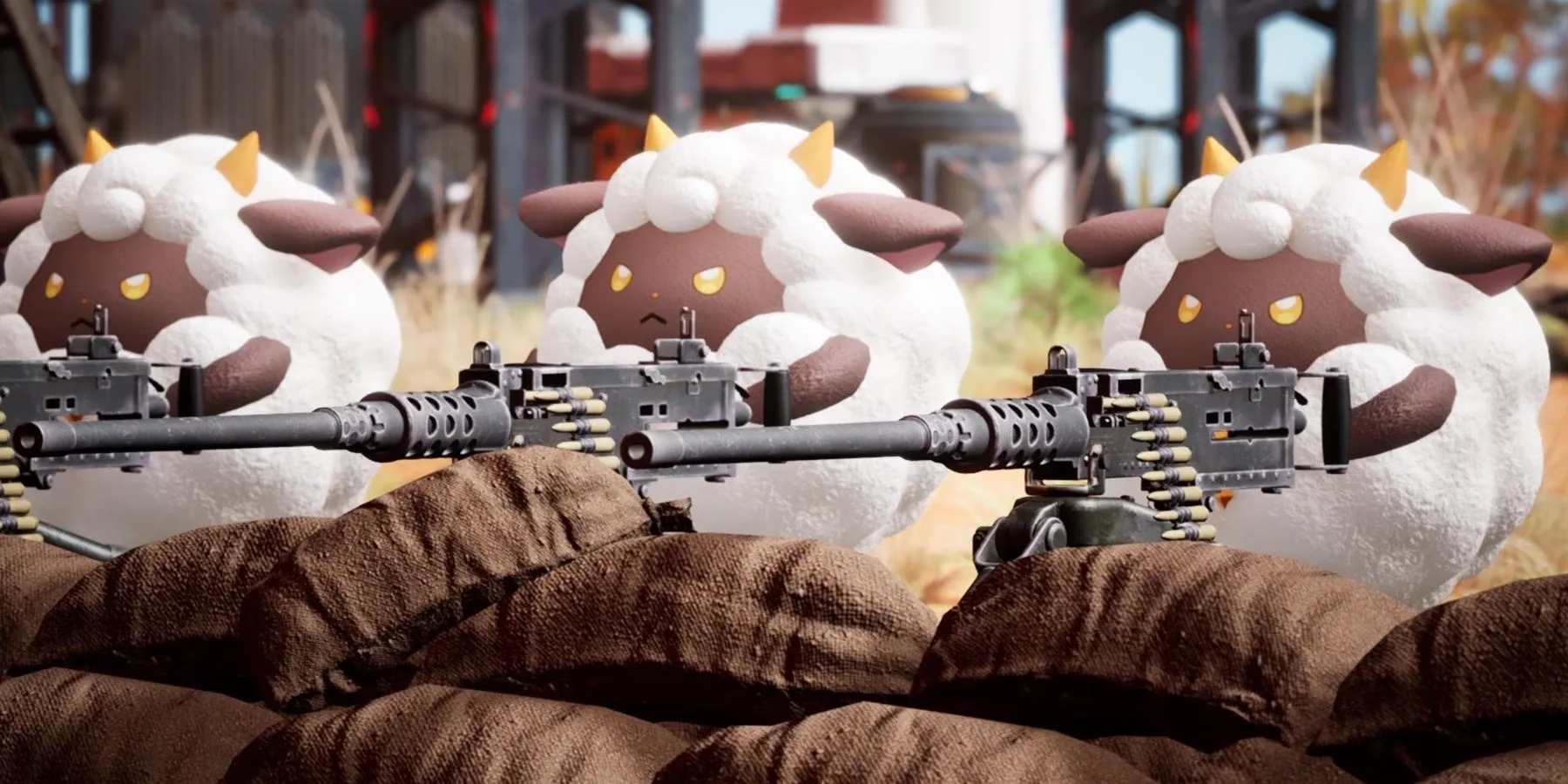
Now, sitting in 2026, I can see that Palworld's early access was a lightning rod more than a verdict. The Pokémon Company's investigation statement did not instantly erase the game, but it became part of the weather system around it. Every creature reveal after that felt like walking through a hall of mirrors, with players asking whether each new Pal was an homage, a coincidence, or a carbon copy. The game evolved, the roadmap expanded, and the conversation softened, but the January 2024 statement still echoes in the background like a low server hum.
For me, Palworld was never only about whether a lamb could hold a rifle or whether a not-Pikachu could generate electricity. It was about a genre flexing its wings. The Pokémon Company wanted to protect its world; Pocketpair wanted to build a different one with familiar grammar. I stood in the middle as a player, not a lawyer, and I still do. The only thing I know for certain is that in 2024, the line between inspiration and infringement became the most watched boss fight in gaming, and none of us had the right armor equipped.
Loading comments...